
Photo Essay
In Indonesia, the island of Flores and its volcanoes are drawing geothermal projects. Built on Indigenous land, these large-scale plants are being developed without regard for local communities and the impacts on their health and the environment.

Short test, long scars
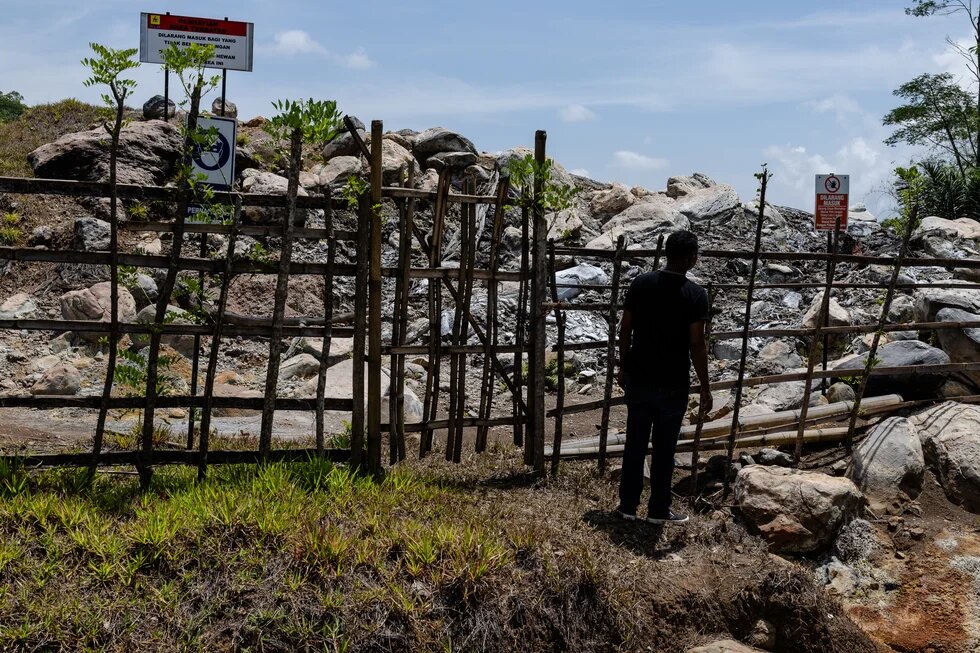
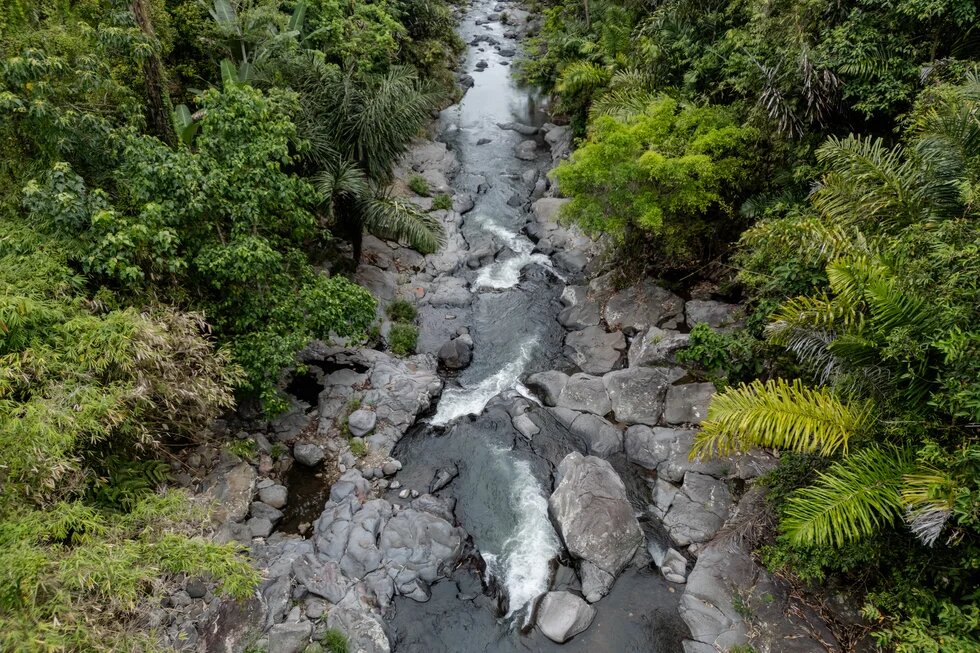
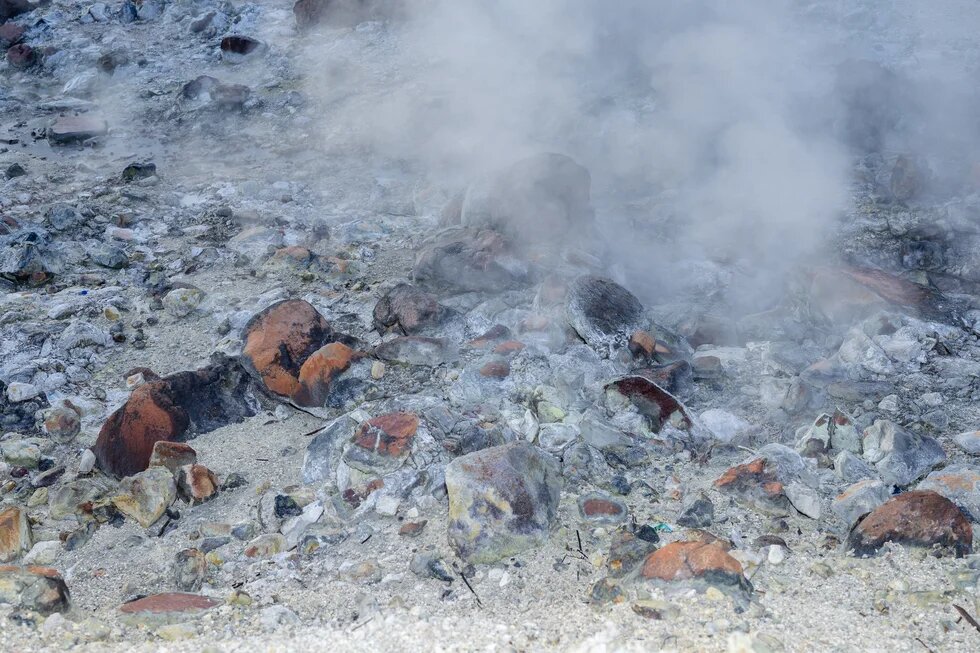
Fear of geothermal energy has a long history. Thirty years ago, the first geothermal power plant was built in Mataloko, in the center of the island—but it failed and was only connected to the grid for a short time. Not far from several houses stands a remnant of the old facility: a borehole surrounded by a fence, next to it a "No Trespassing" sign with a skull and crossbones. Although supposedly filled in, steam escapes from the old borehole. The escaping steam, which reeks of rotten eggs due to hydrogen sulfide—a highly toxic gas—has altered the local environment. The stream that once flowed here is gone, apparently replaced by boiling hot mud that bubbles from the ground, and the nearby fields are deserted because nothing grows there anymore. These enduring signs of abandonment and contamination have shaped local attitudes ever since.
The corrugated iron roofs of the houses are completely rusted. Instead of every 20 years, they have to be replaced every few months in this area. Residents attribute this accelerated corrosion to hydrogen sulfide emissions from the geothermal plant. Residents also complain of skin and respiratory problems, which can be caused by this gas. Hydrogen sulfide is known to cause corrosion, irritate the skin and respiratory tract, and, at very high concentrations, even lead to respiratory arrest. These everyday struggles amplify fears triggered by the abandoned borehole.
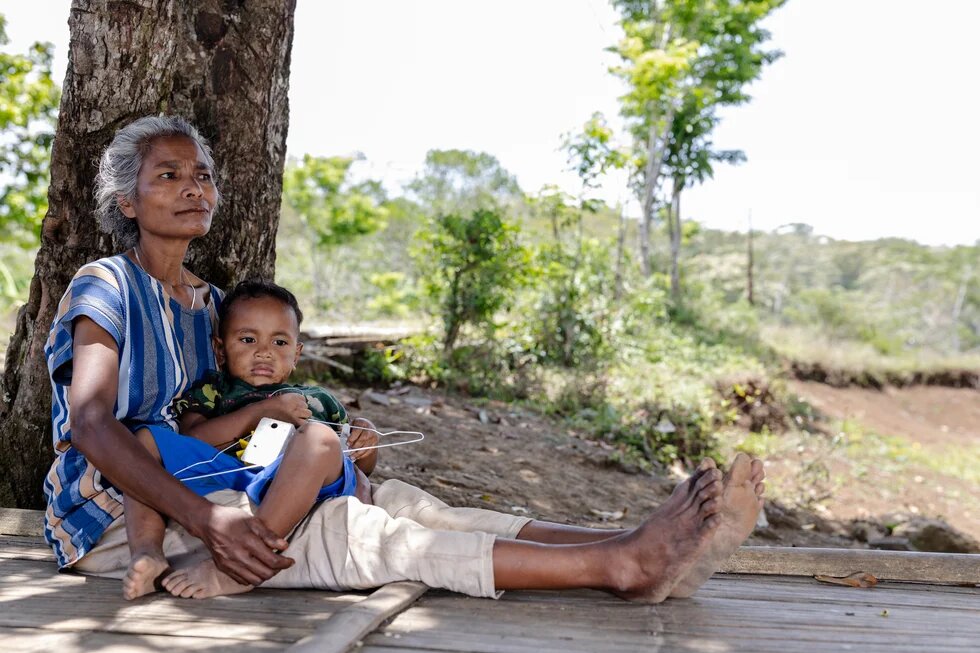
“The land used to be fertile, the harvest good,” says a villager from the affected area, sitting in front of her hut. “But since the drilling started here, that’s no longer the case.” An air quality survey across several villages reveals that the permissible levels of sulfur dioxide, which can lead to acid rain that damages soil and plants, and hydrogen sulfide are exceeded many times over.
The geothermal risk
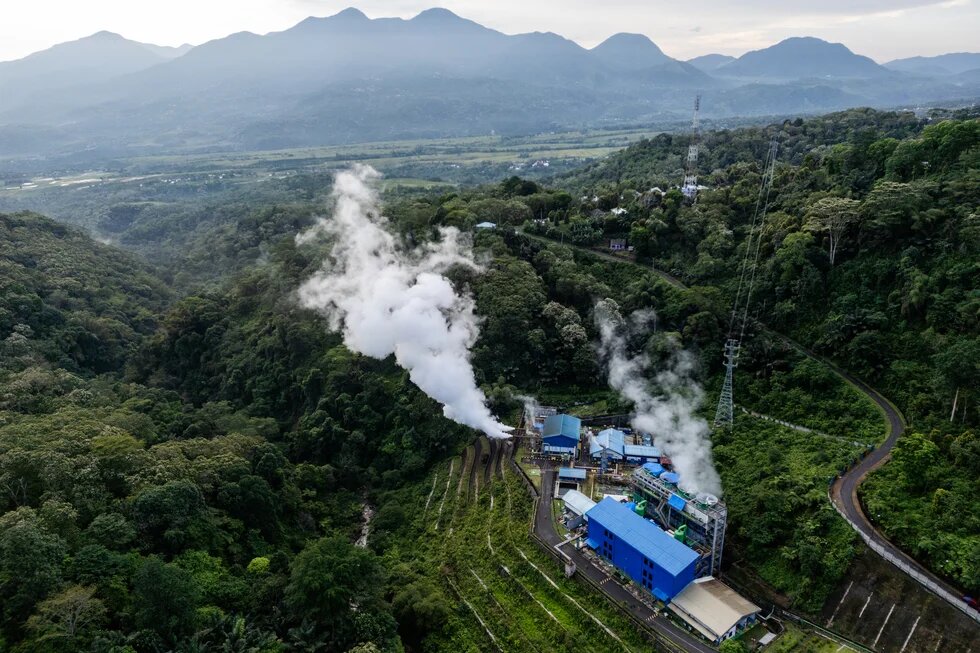
Geothermal energy is generally considered a sustainable, environmentally friendly, and safe solution for generating electricity from geothermal heat – a constantly available energy source. Due to its many volcanoes, experts believe Indonesia, located on the Pacific Ring of Fire, is particularly well-suited for this type of energy production. Indonesia intends to expand the giant plants on this stretch of land to reduce its dependence on fossil fuels and advance its goal of carbon neutrality by 2060. Indonesia has an estimated geothermal potential of 23 gigawatts. By comparison, all civilian nuclear reactors worldwide have a combined capacity of 414 gigawatts. Flores plays a key role in Indonesia’s national strategy, as its province accounts for 5% of the country’s geothermal potential.
Accordingly, the Indonesian government is investing in this renewable energy. For example, 16 power plants are planned for the island of Flores, which has a population of nearly 2 million and is predominantly Catholic. The German development bank KfW is financing the construction and expansion of geothermal energy in Indonesia with €200 million. This includes the two power plants in Ulumbu and Mataloko, where the first attempt failed. They are being built by the Indonesian state-owned electricity company PLN.
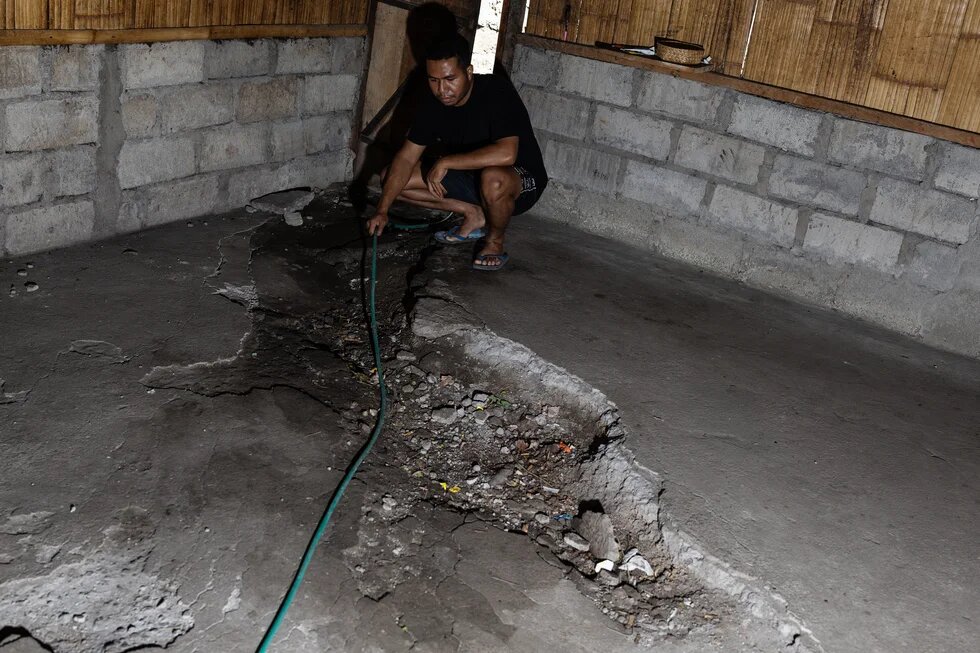
Since 2017, Flores has been designated a “Geothermal Island” by the Indonesian Ministry of Energy and Mineral Resources. Since then, conflicts have erupted in villages including Sokoria, Wae Sano, Mataloko, and Poco Leok. In Mataloko, hot mudflows from the PT PLN Geothermal project have contaminated gardens, rice fields, and residential areas. The pungent smell of sulfur wafts through the air every morning, causing skin diseases and soil damage. Such problems reinforce community resistance even as large-scale projects move forward. People of Mataloko have doubts about the safety of geothermal energy. Whether all the changes and events they observe are actually related to geothermal energy and the drilling, or have another cause – that's something experts need to determine. Those affected have no studies to go on, only their decades of experience. And that tells them that nothing like this happened before the drilling began.
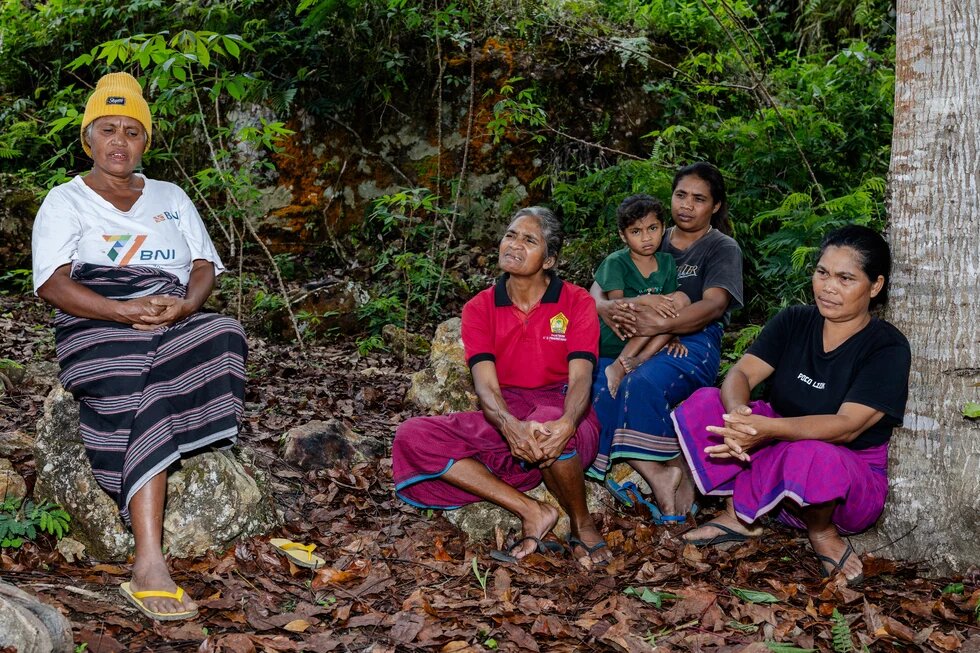
Not far away, the Poco Leok volcano emerged from the morning mist in Lungar village. Women in the community are at the forefront of the fight against the energy company. Elisabeth Lahus, (Picture 32-34, white shirt), says in traditional language, "tana hitu ende dami": the land is our mother. It is the inheritance of our ancestors. “The damage doesn’t just happen where the drill is. It can affect even places 500 meters away. There’s smoke. The sound of bubbling, boiling water fills the area,” she continued.
"We are never afraid to fight for the future of our children and grandchildren," she said. Elisabeth is among dozens of Poco Leok women on the front lines of resistance against the geothermal project, which they say is part of efforts to destroy their living space. Their determination links generations, as the battle for their community’s future unfolds.
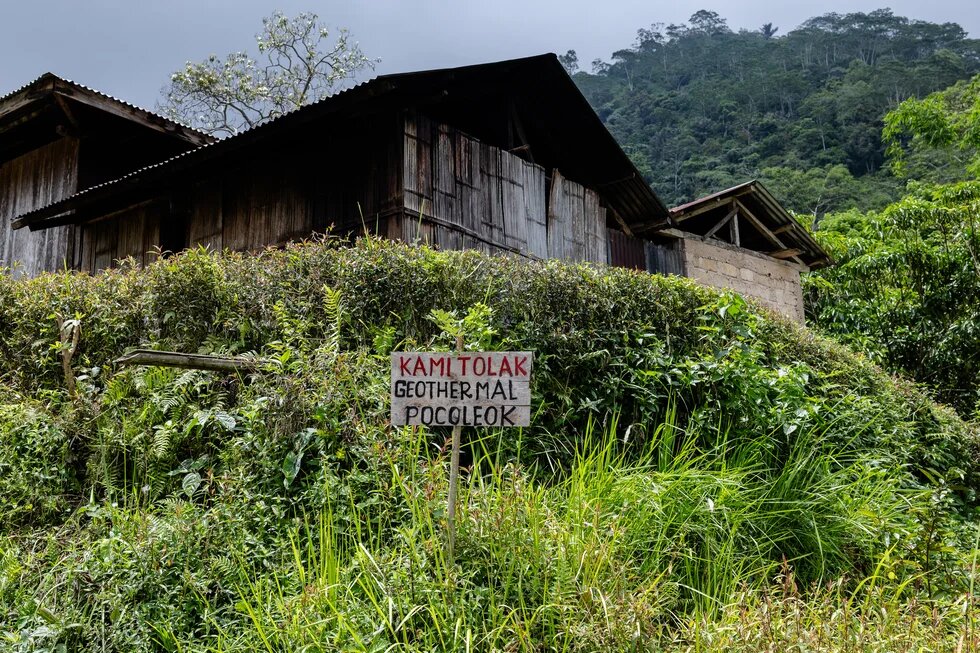
Poco Leok is located three kilometers east of the Ulumbu Geothermal Power Plant, which has been in operation since 2011. Its territory includes 14 hamlets in three villages: Lungar, Mocok, and Golo Muntas. The targeted drilling sites (wellpads) number 60 and are spread across these villages, raising ongoing concerns among residents about their environment. The problem is the same: the negative impacts of geothermal energy will endanger us all, not just the men," Elisabeth concluded, explaining why they refuse to stay silent.
Several people in this community, living simple lives in wooden huts with tin roofs, tell the same story: the plant’s expansion is being carried out at breakneck speed, without the locals being properly informed. Furthermore, according to them, supporters of the project heavily repress any opposition through intimidation and disinformation campaigns disseminated by compliant media outlets.
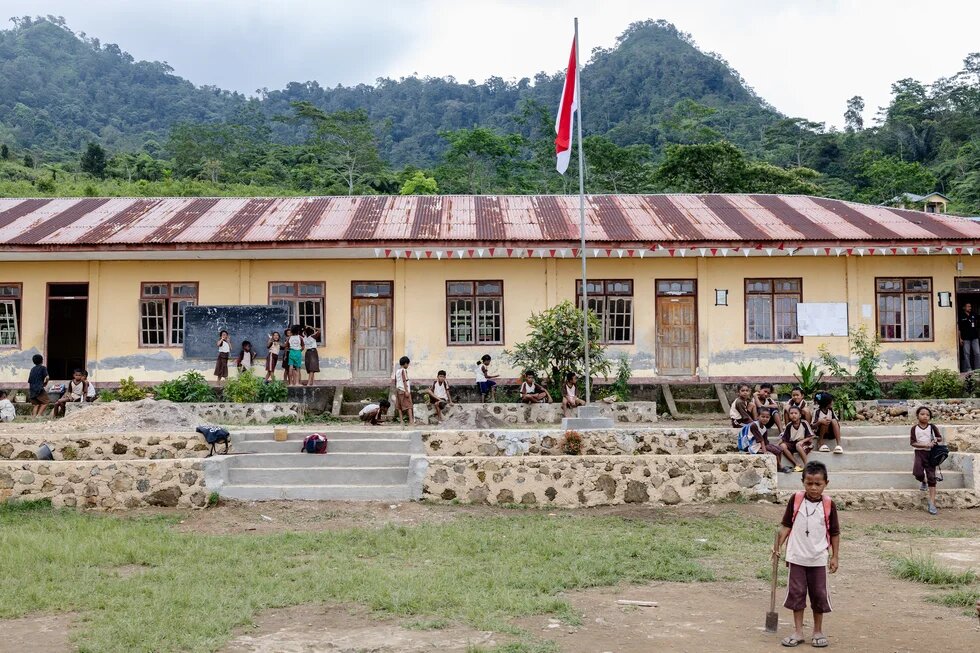
In the Poco Leok area, residents live very simply. They depend on agriculture to meet their family's needs, including growing coffee, candlenuts, chocolate, sweet potatoes, corn, and other crops.
Independent journalists and local communities on Flores Island, Indonesia, face severe police intimidation, physical violence, and smear campaigns for documenting protests against state-backed geothermal energy expansion. The primary target of recent crackdowns is Floresa, a local online media outlet that exposes human rights violations, health risks, and the lack of indigenous consent surrounding projects such as the Ulumbu geothermal plant expansion in Poco Leok, Manggarai Regency.
Herry Kabut, the Editor-in-Chief of Floresa, was physically beaten, choked, and detained by police officers while covering a civilian protest in Poco Leok. Although Kabut had been on the front lines of a protest against the expansion project, located on the territory of Poco Leok’s Indigenous communities, he was not there as a demonstrator. The Editor-in-Chief of Floresa works for one of the few independent media outlets on the island of Flores in southeastern Indonesia.
Hand in hand with indigenous communities
Opposition to the geothermal project in Flores is intensifying. After Catholic church leaders rejected the project, previously quiet voices of dissent have become more vocal throughout the broader community.
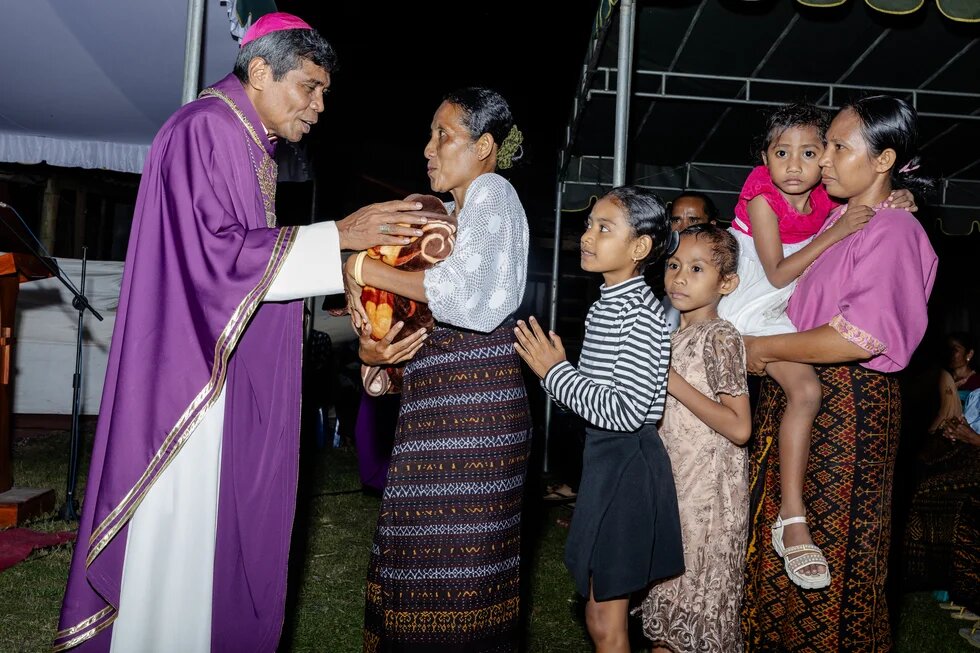
The Catholic Church’s opposition has initiated local resistance. Church leaders, such as priests and parish organizers, have played a central role by organizing protests and leading traditional rejection rituals in affected areas, further strengthening opposition to the geothermal projects.
Compounding concerns, local impacts have become evident to both residents and advocacy groups. In Ngada Regency, farmers and villagers report damage to farmland from mudflows caused by a failed geothermal project. In Poco Leok, Manggarai, plans for geothermal expansion have led to divisions among residents, with some supporting and others opposing the project.
The Divine Word Missionaries, represented by Father Budi Kleden SVD, protest the government's plans in alignment with Indigenous communities. The archbishop, speaking on behalf of Church leadership, acknowledges the benefits of geothermal energy but emphasizes that, given the island's landscape and local reliance on agriculture, such projects pose significant risks to Flores residents. Additionally, the Church raises concerns about geothermal projects' water usage and potential to cause water shortages.
Given these circumstances, since over 80 percent of the people in Flores rely on farming, they will be affected in the future. They could lose their jobs and income, and their culture as an agricultural society might also fade away. As the superior general of the Society of the Divine Word, he is recognized for his human rights advocacy, has spoken out against human trafficking, and recently launched a child-friendly pastoral program to address rising violence against women and children.
Flores villagers refuse to yield
About 150 kilometers west of Mataloko, the Ulumbu geothermal power plant is set to expand from 10 to 40 megawatts with support from KfW (German Development Bank). This expansion requires new drilling. At the site, boiling bubbles rise from the muddy ground, smoke escapes from the former riverbed and mountain slopes, and the smell of rotten eggs lingers in the air verbally and in writing. Archbishop Budi Kleden has also urged the bank to halt further geothermal development. Stakeholders hope KfW will follow the World Bank’s example and withdraw from financing the project due to ongoing controversies.
In response to an inquiry, the German bank KfW issued the following statement: “KfW has suspended financing for the planned infrastructure projects in Ulumbu and Mataloko. PLN has contractually committed to KfW to observe and comply with international environmental and social standards. Due to the protests, KfW has reiterated its request to PLN to implement the necessary processes in accordance with World Bank standards and has recommended measures to improve the information and consent processes for the local population. The project developer is currently working on this. This will take some time.” Despite this, the people of Mataloko and Poco Leok will continue to demonstrate against the two projects. WALHI, an environmental advocacy NGO, urged all local governments and communities in East Nusa Tenggara (NTT) to oppose the policy to develop geothermal projects. The central government's policy is seen as failing to reflect grassroots aspirations.
The geothermal controversy continues, with the government on one side confronting the church and community on the other. The public awaits the results that the government has promised.
__
Garry Lotulung is a freelance photojournalist and documentary photographer based in Jakarta, Indonesia.
Disclaimer: This published work was prepared with the support of the Heinrich Böll Stiftung. The views and analysis contained in the work are those of the author and do not necessarily represent the views of the foundation. The author is responsible for any liability claims against copyright breaches of graphics, photograph, images, audio, and text used.


